

Every animation process begins with a spark. For the Riot Games Valorant Champions Tour opening, that spark was a 60-second brief to capture the raw energy of competitive esports and translate it into a cinematic experience that millions of fans would see at broadcast kick-off. At Genesis Motion Design, we thrive on exactly this kind of challenge — where storytelling, technical craft, and high-stakes delivery converge.
In this behind-the-scenes look at our motion design workflow, we walk you through every stage of the Valorant VCT opener: from concept sketches to the final 4K 60fps delivery. If you have ever wondered how a professional animation studio builds a game cinematic from the ground up, this post is for you.
The Brief: What Riot Games Asked For
Riot Games needed a 60-second cinematic opener for the Valorant Champions Tour broadcast. The brief called for a high-energy, character-driven sequence that would set the tone for the tournament — equal parts esports intensity and cinematic spectacle. It had to showcase three core Valorant agents (Jett, Phoenix, and Sage) in action, highlight their signature abilities, and build to an electrifying team-face-off climax.
Three creative pillars anchored the project:
- Authenticity: The animation had to feel true to Valorant’s established art direction and agent personalities.
- Energy: Every frame needed to pulse with the competitive rhythm of esports.
- Spectacle: The cinematic had to reward repeat viewing — rich with detail for die-hard fans to discover.
The timeline was tight: six weeks from concept to final delivery. Our motion design services team mobilised immediately.
Concept & Storyboarding: Where Ideas Take Shape
Before a single polygon is modelled, every great game cinematic starts on paper. Our creative team began with mood boards that drew from Valorant’s existing visual universe — the neon-soaked maps, the sharp character silhouettes, and the painterly texture style that distinguishes Valorant from other tactical shooters.
We developed three concept directions for the VCT opener:
- The Agent Spotlight: A character-driven montage introducing each agent with a signature gameplay moment.
- The Map Odyssey: A sweeping tour of Valorant’s iconic map locations, transitioning between environments.
- The Action Montage: A fast-cut sequence of high-octane ability plays, building to a three-agent team face-off.
Riot Games selected the action-montage approach — the most technically ambitious of the three. Our storyboard artist then translated this direction into 47 storyboard panels, each mapping a key pose, camera move, or transition beat. Storyboarding is where the animation process first reveals its pacing — shots that feel right on paper sometimes drag on screen, and vice versa.
We use storyboarding not just as a creative tool but as a hard alignment gate. Every stakeholder signs off on the board before production begins. This discipline, refined across dozens of projects in our case studies, eliminates costly mid-production pivots.
Style Frames: Defining the Visual Language

With the storyboard locked, we produced six style frames — fully rendered single-frame compositions that established the lighting, colour palette, and compositional language for the entire cinematic. Style frames are the bridge between concept and execution. They answer the questions storyboards cannot: How does light wrap around Jett’s blade? What colour temperature defines the Phoenix ignition sequence? How much atmospheric haze sits in the background of each map?
For the VCT opener, we balanced Valorant’s established art style — high-contrast, saturated primaries, cel-shaded characters — with Genesis’s signature depth and texture. The result was a visual language that felt unmistakably Valorant while carrying the cinematic weight the broadcast moment demanded.
Our 2D animation studio expertise informed the cel-shading approach and gave us the flexibility to blend 2D and 3D techniques in select shots.
3D Character Animation: Bringing Agents to Life
This is where the real heavy lifting begins. Valorant’s agent models — Jett, Phoenix, and Sage — were provided by Riot Games as base assets. Our role was to rig, animate, and integrate them into the cinematic pipeline.
Rigging: Each agent required a custom animation rig tailored to the action sequences we had planned. Jett’s rig, for example, needed full range of motion for her acrobatic blade-storm sequence — torso twists, aerial spins, and rapid directional changes. Phoenix required a fire-effects rig that could drive particle emitters directly from animation curves. Sage’s rig had to support her signature resurrection orb and wall-casting movements with precise hand-keyed finger animation.
Animation: Our animation team worked in Autodesk Maya, blocking out key poses first, then refining timing curves and overlap. The most technically demanding shot in the entire cinematic was Jett’s blade-storm sequence — a continuous 4.5-second action shot with three agent interactions, particle collisions, and a 180-degree camera arc. That single shot consumed nearly a week of an animator’s time.
Rendering: We rendered in Redshift on our GPU farm. The final cinematic delivered at 4K resolution, 60 frames per second, with render times averaging 18 minutes per frame for the heaviest VFX shots.
For a deeper look at how character animation drives brand storytelling, see Social Media Video: Content That Gets Watched — which explores how animated character content performs across platforms.
VFX & Compositing: The Final 20%

If modelling and animation build the skeleton of a cinematic, VFX and compositing give it soul. For the VCT opener, the VFX layer included:
- Particle systems: Jett’s smoke trails, Phoenix’s fire walls, Sage’s radiant healing orbs — each required custom particle behaviour tuned to the shot.
- Energy and environmental FX: Atmospheric haze, lens flares, muzzle flashes, and map-specific environmental effects.
- Colour grading: We applied a broadcast-grade colour grade calibrated for the esports viewing experience — high contrast, punchy saturation, with skin tones preserved for agent close-ups.
Compositing in Adobe After Effects layered all passes — beauty, shadow, specular, ambient occlusion, volumetric, and FX — into the final image. This stage is deceptively time-intensive. On the VCT opener, compositing consumed roughly 20% of the total production hours but delivered what our creative director calls “the final 20% of magic” — the subtle glow, depth, and polish that separates a good render from a cinematic one.
Check out The Power of Animation in Advertising for more on how high-end compositing elevates brand content.
Sound Design & Final Delivery
Animation without sound design is half the experience. We collaborated with an external sound designer who built a custom SFX and score synchronisation track for the VCT opener. Key creative decisions included:
- A heartbeat-driven percussion bed that accelerates with the action pacing
- Agent-specific audio signatures — Jett’s blade woosh, Phoenix’s fire crackle, Sage’s orb resonance
- A dynamic mix that shifts from cinematic to broadcast-announcer energy at the team-face-off climax
Delivery specs: The final cinematic was exported at 4K (3840 x 2160), 60fps, in multiple aspect ratios — 16:9 for broadcast, 1:1 and 9:16 for social cuts, and 21:9 for stadium widescreen displays. Every export passed a multi-pass QC check: frame accuracy, audio sync, colour space conformity, and broadcast-safe luminance levels.
The entire project — from signed brief to final delivery — landed at six weeks and two days. Two days past the six-week target, but within the buffer we had built into the schedule from day one.
FAQ
Q: How long does it take to produce a game cinematic intro?
A: For a 60-second cinematic like the Valorant Champions Tour opener, expect 6–8 weeks from concept to final delivery. This includes storyboarding, style frames, animation, VFX, compositing, and sound design. Complex character counts or heavy VFX can extend the timeline.
Q: What software does Genesis Motion Design use?
A: Our primary animation process relies on Autodesk Maya for 3D animation, Redshift for GPU rendering, Adobe After Effects for compositing and motion graphics, and DaVinci Resolve for colour grading. We select tools based on each project’s specific requirements and are comfortable working with client-provided asset pipelines.
Q: How much does an esports cinematic like this cost?
A: High-end game cinematic production typically ranges from SGD 50,000 to SGD 150,000+ depending on length, complexity, character count, and VFX requirements. Every project is scoped individually — contact us for a custom quote based on your brief.
Q: Can Genesis work with existing game IP and character models?
A: Yes. We regularly work with client-provided assets and character models, as we did with Valorant’s agent models for the VCT opener. We handle rigging, animation, and integration while respecting the established art direction and IP guidelines.
Q: What is the difference between a game cinematic and a commercial animation?
A: Game cinematics typically prioritise storytelling, character performance, and world-building within an established IP universe. Commercial animations focus on product messaging, brand storytelling, and conversion objectives. Our motion design workflow adapts to both — the same animation and VFX pipeline serves both creative needs. The key difference is in the creative brief: cinematics ask “what story does this world tell?” while commercials ask “what action should the viewer take?”
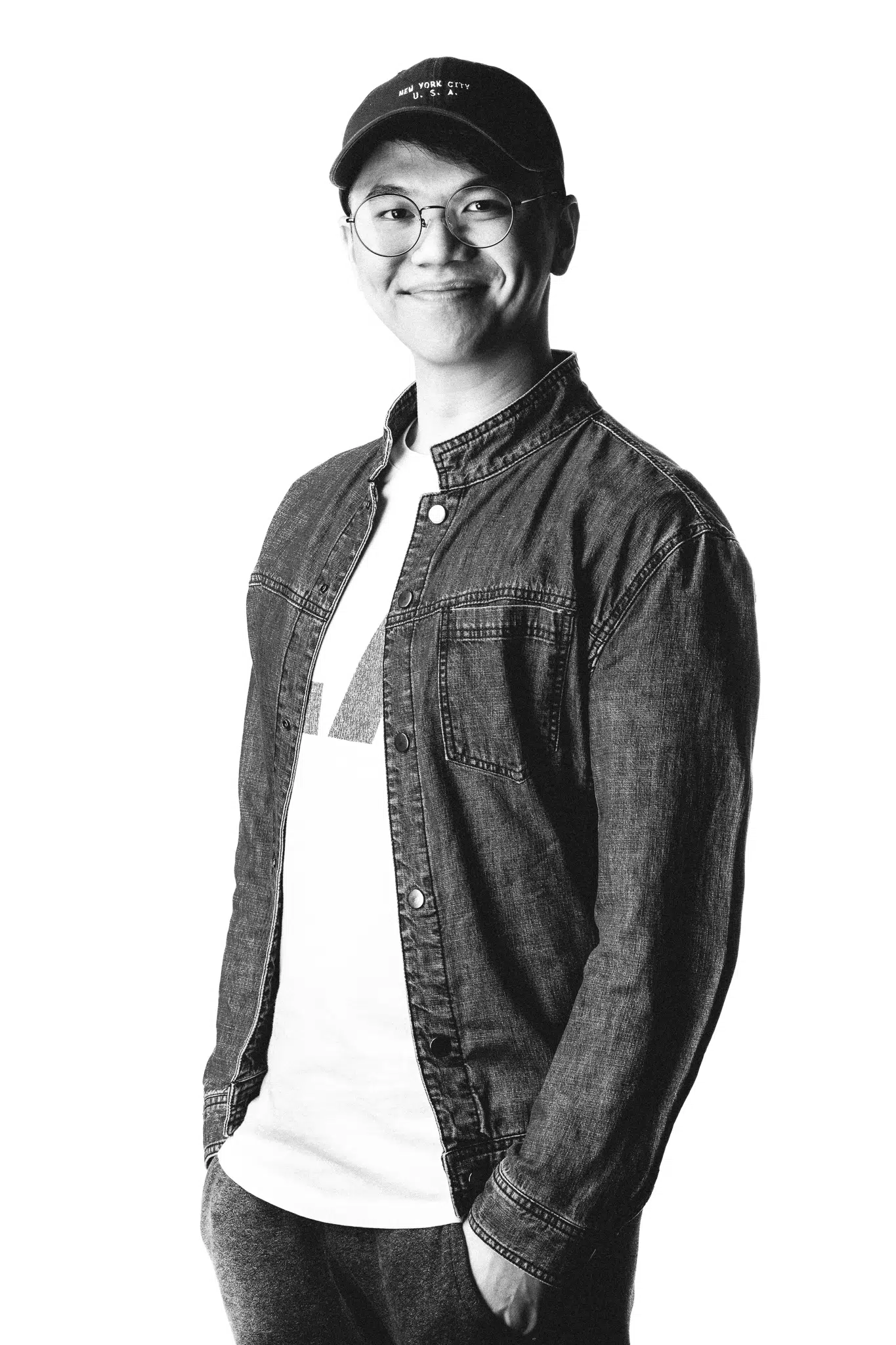
Benjamin Ang, the Creative Director of Genesis Motion Design, has more than 10 years of experience in motion graphics, design, and animation, Benjamin embarked on his own journey in 2015 with the birth of Genesis Motion Design, a studio focused on brand-driven storytelling.