
Your logo is the most repeated visual in your brand’s entire existence. It lives on your website, your social profiles, your email signatures, your invoices, your product packaging, and every piece of video content you produce. And for most brands, it sits completely still — a static image in a world of motion.
Logo animation changes that. An animated logo takes the mark your audience already recognises and adds a layer of energy, intention, and memorability that a static logo cannot match. When the Netflix “N” ripples into frame, or the Google “G” resolves into its four-colour mark, those moments are not decoration. They are brand reinforcement — micro-stories told in seconds that signal polish, confidence, and attention to detail.
At Genesis Motion Design, we have animated logos for esports leagues, tech startups, government agencies, and Fortune 500 brands across Singapore and the wider Asia Pacific region. This guide covers what logo animation is, why it deserves a place in your brand toolkit, the main styles to choose from, the production process from brief to delivery, and what you should expect to invest.
Logo animation is the process of bringing a static brand mark to life through motion. It can mean having the logo draw itself onto the screen, having its elements slide together into position, having it morph from one form into another, or having it react to audio, data, or user interaction.
The key distinction is this: a logo animation is not a brand film. It is not a 30-second product spot. A logo animation is a short, self-contained sequence — typically between 2 and 8 seconds — that transitions a brand mark from an opening state (often invisible, fragmented, or simplified) into its finished, recognisable form.
Logo animations are designed to be used everywhere. They play at the start of corporate videos as branded intros. They animate into position on website headers. They live as loading indicators in mobile apps. They appear as email signature GIFs, social media profile animations, and presentation deck transitions. A well-designed logo animation is modular: one asset that works across every format a brand operates in.
An animated logo is not a cosmetic upgrade. It is a brand performance investment with measurable returns — and the data from modern marketing platforms makes the case clearer every year.
1. It commands attention in a scrolling world.
Social media feeds — Instagram, TikTok, LinkedIn, YouTube Shorts — are motion-first environments. A static logo at the start of a video is invisible compared to content that moves from frame one. Logos that animate into position signal to the viewer that something worth watching has begun. Brands that use animated logo intros on social video content report higher retention through the first three seconds, the critical window where most viewers scroll away.
2. It reinforces brand recall through dual-channel processing.
When a viewer sees a logo move — a shape resolves, a wordmark types itself on, a colour palette shifts into place — their brain processes the information through two channels simultaneously: visual recognition and motion perception. This dual-channel encoding strengthens memory. Neuroscientists call it the picture-superiority effect amplified by motion, and it is why audiences recall animated brand marks more reliably than static ones.
3. It communicates brand personality without a single word.
A logo that snaps together with fast, sharp motion signals efficiency and technology. A logo that breathes in slowly, its elements easing into place, signals calm and craft. A logo that draws itself on like ink spreading across paper signals heritage and humanity. Every motion decision — speed, easing, material behaviour, sound design — broadcasts a message about who your brand is. Logo animation is brand strategy expressed in milliseconds.
4. It creates production value at low incremental cost.
Compared to the cost of a full brand film, a 30-second commercial, or a series of product shoots, a logo animation is one of the highest-ROI brand investments available. A single animated logo, properly designed, can be deployed across a hundred different touchpoints for years. The asset is timeless in a way that campaign-specific creative is not — your logo changes far less often than your quarterly marketing strategy.
Not all logo animations are created equal. The style you choose should reflect your brand identity, your audience expectations, and the platforms where the animation will live. Here are the six most common approaches, from simplest to most ambitious.
1. Reveal Animation.
The logo appears through a simple entrance effect — a fade, a wipe, a scale-up from zero. Reveal animations are clean, professional, and fast to produce. They work well for corporate brands, professional services, and any context where understatement is a brand value. A reveal animation says: we are polished, not flashy.
2. Draw-On Animation.
The logo draws itself onto screen as if an invisible hand is writing or sketching it in real time. This technique works beautifully for brands with distinctive letterforms, wordmarks, or line-based marks. It conveys craftsmanship, creativity, and a human touch. Architecture firms, design studios, artisanal brands, and educational institutions use draw-on animations to signal that their work is made, not manufactured.
3. Build-Up Animation.
The logo’s individual elements — icon, wordmark, tagline, colour blocks — animate into position separately, each with its own entrance timing and motion style. Build-up animations feel dynamic and energetic. They are common in technology, esports, media, and startup branding, where energy and forward momentum are part of the brand personality.
4. Morphing Animation.
The logo transitions from one shape into another — a symbol resolves into the wordmark, an abstract mark forms the full logo, or the icon cycles through the brand’s visual history. Morphing animation is technically demanding and creatively ambitious. It works for brands with deep visual equity, anniversary campaigns, or rebrand moments where showing evolution is part of the message.
5. 3D Logo Animation.
The logo exists as a three-dimensional object — it rotates, catches light, reflects surfaces, or explores depth. 3D logo animation adds production value that 2D alone cannot match. It is the standard for film title sequences, broadcast packages, premium product launches, and any brand that wants to signal investment and ambition. 3D logo work requires Cinema 4D, Blender, or Houdini skills alongside traditional motion design craft.
6. Reactive and Sound-Driven Animation.
The logo animates in sync with audio — it pulses to a beat, resolves on a sound effect, or generates its motion from a music waveform. Reactive logo animations create an integrated sensory experience where sight and sound reinforce each other. They are used heavily in broadcast, podcasts, music brands, and live events. Sound design for these animations is not an afterthought — it is a co-equal part of the creative.
Understanding the production process helps you plan timelines, set expectations, and brief a studio effectively. Here is how a professional logo animation moves from concept to final delivery.
Stage 1: Discovery and Brief (Days 1-3).
The studio reviews your existing brand assets — logo files (vector format preferred), brand guidelines, colour palette, typography, and any existing motion or video content. This is also when you discuss where the animation will be used: video intros, website headers, app loading screens, social content, presentation decks. Each platform has different duration, resolution, and format requirements. The best briefs include references — two or three examples of logo animations you admire with specific notes on what you like and what you do not want.
Stage 2: Concept and Styleframes (Days 4-7).
The designer creates static styleframes showing the key visual moments of the animation — how the logo looks at the start, mid-transition, and final state. 2-3 distinct motion directions are typically explored. This is the most important approval gate in the project. The motion style, colour grade, and overall energy are locked here before production hours begin.
Stage 3: Animation Production (Days 8-14).
Using Adobe After Effects as the primary tool — with Cinema 4D or Blender for 3D work — the motion designer brings the approved styleframes to life. Every element receives custom keyframe animation with manual easing adjustments. Motion blur, depth of field, and particle effects are added where the style calls for them. For sound-driven animations, the audio track is locked at this stage and the motion is timed to the waveform.
Stage 4: Sound Design (Days 12-16, parallel with animation).
A sound designer creates the audio signature — a 1-3 second sonic logo — that syncs with the visual animation. The sound is mixed and mastered for multiple playback environments: headphones, phone speakers, desktop, and broadcast. The final audio is delivered as separate stems so the brand can use the visual animation with or without sound depending on the platform.
Stage 5: Delivery and Formatting (Days 15-18).
The final animation is rendered and delivered in every format the brand needs: MP4 with alpha channel for video editors, GIF for email and social, Lottie or Rive for web and app, MOV/ProRes for broadcast, and high-resolution still frames for print and deck use. A usage guide is included that specifies minimum sizes, safe zones, and which format to use on which platform.
Logo animation pricing depends on complexity, duration, style, and the studio’s experience level. Here are realistic brackets for the Singapore market in 2026:
Basic 2D Logo Animation (SGD 1,500 – SGD 4,000): A clean reveal or build-up animation, typically 2-5 seconds, using existing brand assets. One motion direction, one revision round, delivered in MP4 and GIF formats. Suitable for startups, small businesses, and brands wanting a professional intro for video content.
Mid-Range Logo Animation (SGD 4,000 – SGD 10,000): Multiple motion directions explored at concept stage. Custom visual effects — particle systems, liquid motion, light leaks, or draw-on techniques. Sound design included. Delivered in MP4, GIF, MOV, and Lottie formats. Suitable for mid-market companies, growing tech brands, and businesses refreshing their visual identity.
Premium 3D Logo Animation (SGD 10,000 – SGD 25,000): Full 3D production with modelling, texturing, lighting, and camera work. Original sound design with sonic branding consultation. Multiple format deliveries including broadcast-ready ProRes. Three revision rounds included. Suitable for established brands, broadcast packages, premium product launches, and rebrand campaigns.
Enterprise and Broadcast Logo Packages (SGD 25,000+): Multi-asset packages — primary logo animation, secondary variants (vertical, horizontal, icon-only), animated brand toolkit elements. Custom typeface animation, colour palette transitions, and full sonic identity development. Suitable for broadcast networks, global brands, and organisations launching new visual identity systems.
Most studios in Singapore, including Genesis Motion Design, offer hybrid packages — a hero logo animation at the premium tier with simplified variants at lower cost, giving you a complete animated logo system without blowing the budget on every variant.
After years of producing logo animations for brands across industries, here are the principles that separate the logos people remember from the ones they skip.
Keep it short. A logo animation should end before the viewer wonders when it will end. The sweet spot is 2-5 seconds for a branded intro, 1-3 seconds for a website or app animation. Audiences tolerate shorter animations better than longer ones — the worst animated logo is one that overstays its welcome.
Preserve legibility at the end state. The final frames of a logo animation must leave the logo perfectly readable. All motion, effects, and transformations should resolve into a clean, static final image. If the audience cannot read the brand name at the end, the animation has failed at its most basic job.
Match the motion to the brand personality. A luxury fashion brand does not want a glitchy, aggressive animation. An esports team does not want a slow, delicate fade. The motion style is a brand statement — make it intentionally.
Design for the smallest screen first. Most logo animations will be seen on mobile phones — in social feeds, messaging apps, and mobile websites — before they are seen on a cinema screen. Ensure the animation reads clearly at small sizes. Fine details that look great on a 27-inch monitor may disappear on a 6-inch phone screen. Test at 100px wide before approving the final render.
Include a static reference frame. Every logo animation delivery should include at least one high-resolution PNG of the final frame. This ensures that when the logo appears in contexts that cannot play animation — print materials, static email signatures, third-party directory listings — the brand mark is still represented accurately.
Own your source files. Make sure your contract with the studio includes delivery of project source files (After Effects project files, 3D scene files, and any custom assets). You are not just buying the rendered video — you are buying the ability to update, localise, and re-export the animation in the future without starting from scratch.
Once your logo animation is delivered, here is where it creates the most impact.
Video Intros and Outros: The classic use case. Your logo animation opens and closes every piece of video content your brand produces — YouTube videos, webinars, product demos, social clips, internal communications. Over time, this builds a Pavlovian association: when viewers see your animated logo, they know they are about to watch something worth their attention.
Website and App: An animated logo in the site header or loading screen adds polish and signals a premium digital experience. Progressive brands use subtle logo animations — a gentle colour shift on hover, a mark that resolves on page load — to create delight without distraction.
Email Signatures: A compact animated GIF of your logo in email signatures is one of the simplest, highest-reach uses of logo animation. Every email becomes a micro-branding opportunity. Keep the file size under 500KB for reliable delivery across email clients.
Presentation Decks: An animated logo on title slides, section dividers, and closing slides turns a standard deck into a branded experience. For investor pitches, sales presentations, and conference keynotes, the difference between a static PDF and one with motion is the difference between forgettable and compelling.
Social Media Profiles: Platforms like TikTok, Instagram, and LinkedIn support animated profile content and cover media. An animated logo variant optimised for these spaces gives your brand a living presence where audiences spend their time.
Digital Out-of-Home and Events: On LED screens at trade shows, retail environments, and live events, a logo animation commands attention in spaces designed for motion. Event producers and exhibition designers actively seek animated brand assets because static logos on large-format screens look unfinished.
What is logo animation?
Logo animation is the process of bringing a static brand logo to life through motion design. It involves animating the logo’s elements — icon, wordmark, colours, or shapes — so that they enter, transition, or transform on screen. Logo animations are typically 2 to 8 seconds long and are used as branded intros for videos, animated headers on websites, loading screens in mobile apps, GIF signatures in emails, and motion assets for social media profiles.
How much does logo animation cost in Singapore?
Logo animation in Singapore typically costs between SGD 1,500 and SGD 25,000, depending on complexity. A basic 2D reveal or build-up animation ranges from SGD 1,500 to SGD 4,000. A mid-range custom animation with sound design and multiple format deliveries ranges from SGD 4,000 to SGD 10,000. Premium 3D logo animation with full modelling, texturing, lighting, and sonic branding ranges from SGD 10,000 to SGD 25,000. Enterprise broadcast packages with multi-asset delivery start from SGD 25,000.
How long does it take to create a logo animation?
A professional logo animation typically takes 2-3 weeks from brief to final delivery. The timeline breaks down as: discovery and brief (1-3 days), concept and styleframe exploration (3-4 days), animation production (5-7 days), sound design (2-3 days, running parallel with animation), and final delivery with formatting (1-2 days). Rush delivery is sometimes available at a premium. The largest variable is the number of motion directions explored at the concept stage and the number of revision rounds.
What is an animated logo design called?
An animated logo design is most commonly called a logo animation, but it also goes by several other names in the industry: animated logo, motion logo, logo reveal, logo intro, brand animation, or animated brand mark. In professional motion design, the deliverable is often referred to as an animated logo ident or a brand sting — particularly in broadcast and film contexts where the animated logo appears as a short sequence before or after content.
What is the best file format for a logo animation?
The best file format depends on where the animation will be used. MP4 with alpha channel (transparency) is the standard for video editors to overlay on footage. GIF is optimal for email signatures and social media posts where autoplay is supported. MOV or ProRes 4444 is the standard for broadcast and professional post-production. Lottie or Rive formats are used for web and app animations because they are lightweight, scalable, and interactive. A professional logo animation delivery should include all relevant formats so the brand does not need to convert files later.
Do I need an animated logo for my business?
An animated logo is most valuable when your brand regularly produces video content, has an active social media presence, runs digital advertising, or competes in a visually driven industry such as technology, media, fashion, or consumer goods. If your brand primarily operates in static formats — print, signage, invoices — the return on logo animation is lower. The threshold question is: do you produce content that plays on screens? If yes, an animated logo elevates every piece of that content with a one-time production investment.
Ready to bring your brand to life? Genesis Motion Design creates original logo animations for brands across Singapore and Asia Pacific. View our motion graphics services or get in touch to discuss your logo animation project.
If you found this guide useful, here are three more articles from the Genesis Motion Design blog that go deeper into related topics.
What Is Motion Design? The Complete Guide for Brands — Logo animation is one application of motion design. This guide explains the full discipline — from animated typography to 3D product visualisation — and how brands use motion design across every channel.
What Is Kinetic Typography? The Art of Moving Text in Motion Design — Typography is the foundation of most wordmark logo animations. Lea how moving text shapes brand communication from film titles to social content.
2D Animation Pricing Singapore: What to Budget for Your Project — If your logo animation is part of a larger motion design project, this guide breaks down what animation costs in Singapore and what drives pricing at each tier.
___
Author: Benjamin Ang is the Founder, Creative and Animation Director of Genesis Motion Design. With over 10 years of experience in motion graphics, design, and animation, he founded Genesis in 2015 to bridge creative cultures between Singapore and Los Angeles. Named to Forbes 30 Under 30 Asia 2020 (Media, Marketing and Advertising), his work has earned Webby Award nominations and W3 Awards Best of Show. His client portfolio spans Fortune 500 companies and SMEs across APAC and the US, including McDonald’s, Riot Games, Meta, Razer, and Disney.
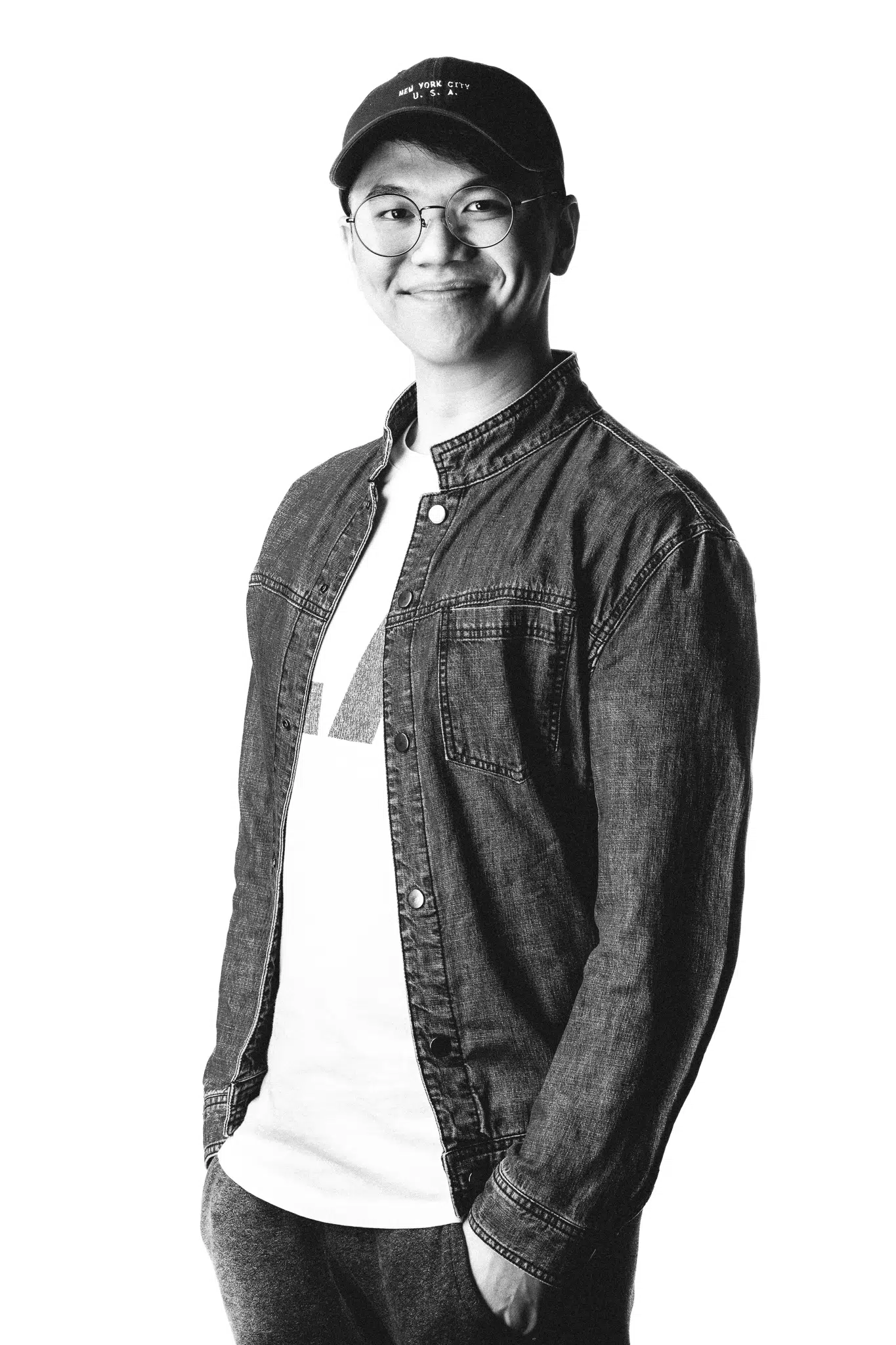
Benjamin Ang, the Creative Director of Genesis Motion Design, has more than 10 years of experience in motion graphics, design, and animation, Benjamin embarked on his own journey in 2015 with the birth of Genesis Motion Design, a studio focused on brand-driven storytelling.