
2D 3D Animation Campaign Events Motion Graphics Social Media

VALORANT Champions Tour Pacific

Client

Riot Games

Agency

Genesis Motion Design

Production

Genesis Motion Design

Year

2023

What We Built

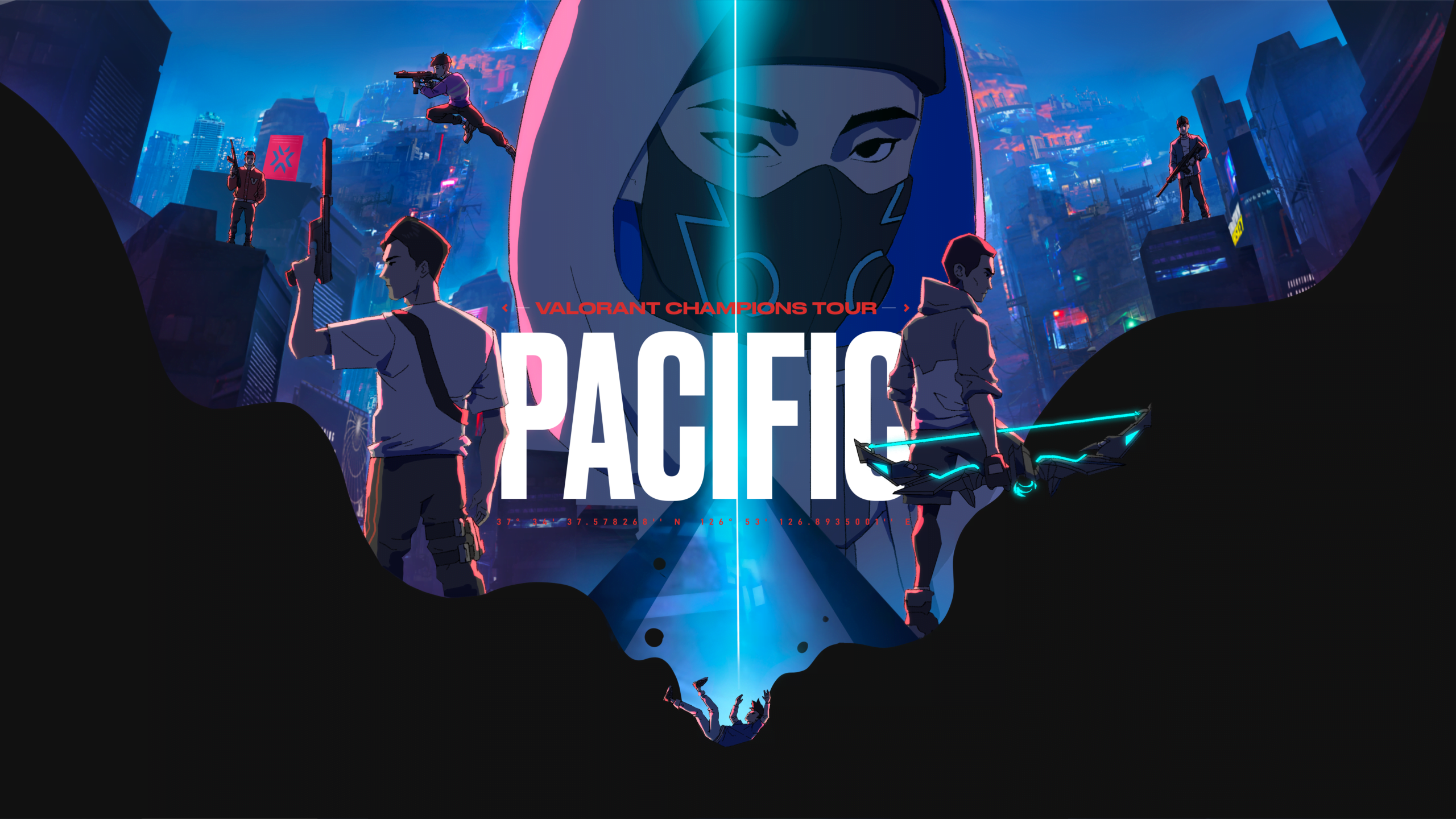
Genesis Motion Design produced the complete broadcast motion package for the VALORANT Champions Tour Pacific — the premier regional league for Riot Games’ tactical shooter, watched by millions across Southeast Asia and Oceania. The package comprised over 20 distinct deliverables: match-day overlays, team introduction sequences, transition bumpers between segments, player statistic cards, draft-phase screens, and full broadcast opens and closes. Everything had to run flawlessly at 4K resolution, 60 frames per second, across live broadcast, streaming platforms, and stadium LED displays simultaneously.
The Design System: Modularity at Scale

The core challenge was not the design itself but the delivery matrix. Broadcast motion design must function at three radically different scales at the same moment: the stadium LED wall stretching sixty feet wide, the Twitch and YouTube stream at 1920 by 1080 pixels, and mobile vertical crops for highlight clips. Creative Director Benjamin Ang and the design team made an early, decisive architectural choice: instead of designing each deliverable as a standalone asset, they built a modular design system of approximately 200 reusable components — lower thirds, transition frames, stat-card containers, and overlay elements — that could be reconfigured and recomposed across all 20-plus deliverables. This modular approach compressed what would have been a sprawling asset matrix into a manageable, version-controlled kit of parts that the animation team could assemble, rather than build from scratch each time.

Motion Language Bo
from the Game

Rather than applying an external design language onto VALORANT, the team mined the game itself for motion vocabulary. Agent ability timings — the wind-up of a Sova recon dart, the snap of a Jett dash, the bloom of a Sage resurrection — became the rhythmic DNA of the transition sequences. Map geometries from Split, Bind, and Haven informed the angular, architectural quality of the frame compositions. Agent colour palettes — the gold and teal of Phoenix, the violet and cyan of Omen — were mapped onto the broadcast’s colour system so that team-side overlays carried the right tonal association without resorting to literal character illustrations. The result was a broadcast package that felt native to VALORANT’s world rather than a generic esports skin stretched over the production.

The Render Pipeline and Broadcast Compliance

With over 1,800 final frames rendered at 4K 60fps — many involving heavy particle systems for ability effects and atmospheric elements — the team deployed a distributed render farm using After Effects with Deadline. Broadcast QC added another layer of rigor that digital-first motion designers rarely face: zero tolerance for frame drops, mandatory Rec. 709 colour-space delivery despite designing in sRGB (requiring careful gamma-shift compensation), and audio synchronisation locked to exact frame positions — a 15-second transition bumper needed to hit its sound cue at frame 720, and the audio mix changed three days before broadcast. File naming conventions fed directly into broadcast ingest systems that choked on spaces, special characters, and long filenames, forcing a disciplined UPPERCASE_UNDERSCORES_SHORT naming protocol across every export. The broadcast-specific formatting, codecs, and QC added roughly 20 percent to the production budget compared to a digital-only campaign of equivalent creative scope.

02.-

The Approach

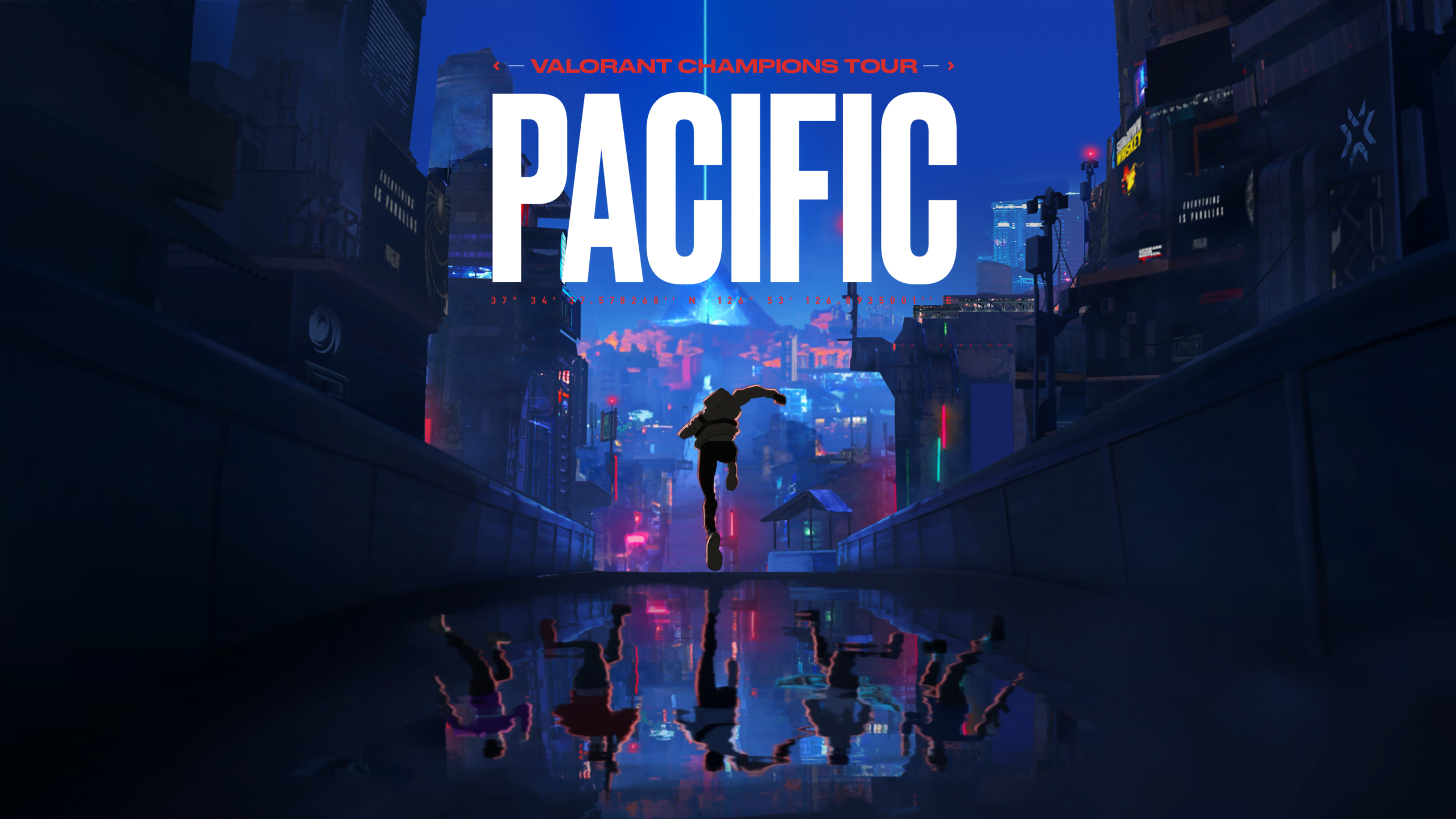
Our core visual concept was centred around water—paying homage to the Pacific region being united by surrounding water, unlike other international leagues (Americas and EMEA) that are geographically connected by land. The theme “Making Waves” set the visual precedence for everything from the designed environments to the fluidity of animation.

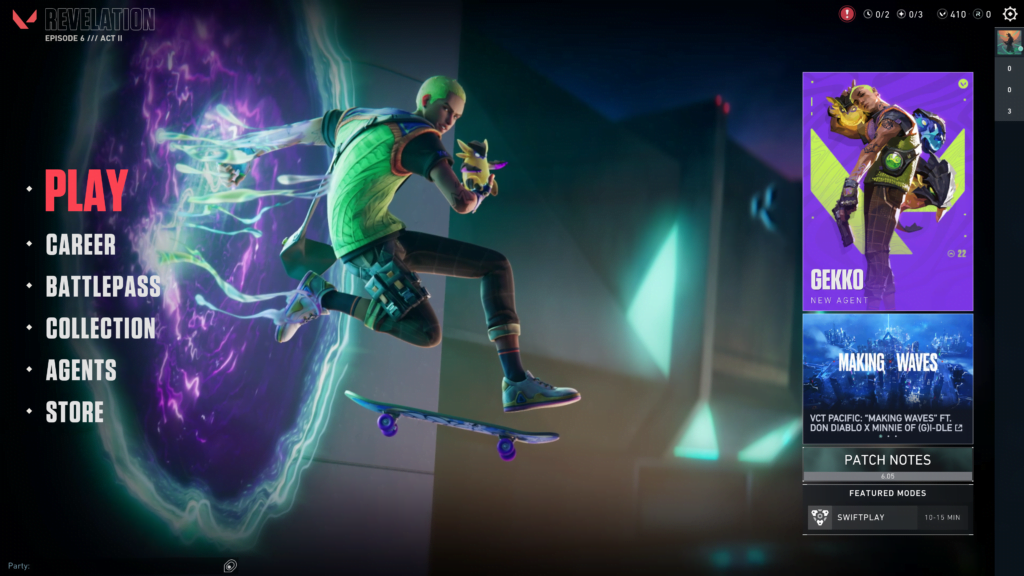
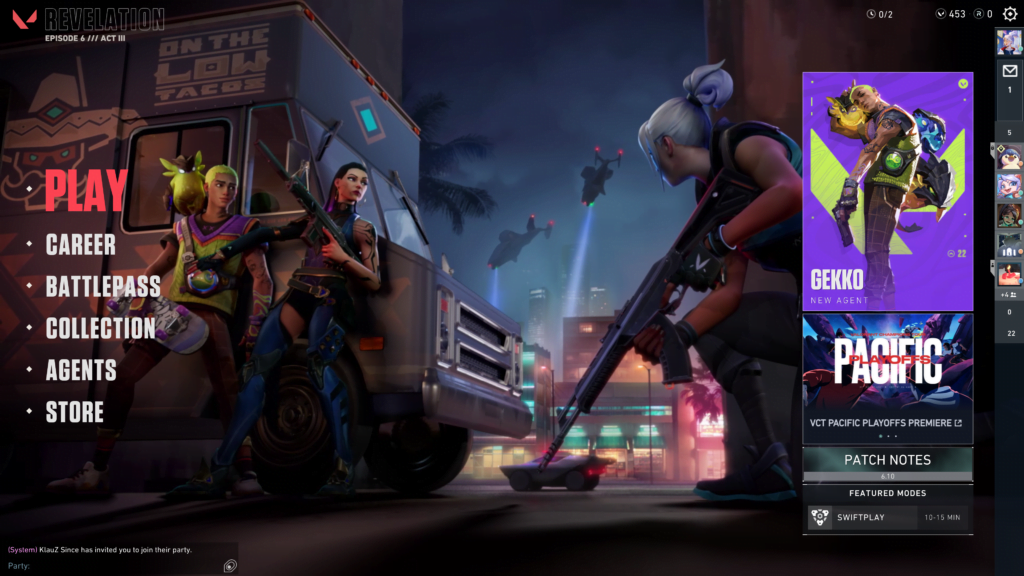
The Pacific League kicked off with ten teams from the Asia-Pacific (APAC) region, and culminated in the top six qualifying for the playoffs stage. This gave us two extremely pivotal points of the Pacific League to spotlight: the launch and playoffs premiere.

0+

hours over 5+ months

0+

views in 7 days (Launch Video)

0+

views in 7 days (Playoffs Premiere Video)

Project Timeline and Team Composition

The project spanned 8 weeks from creative kickoff to final delivery, moving through five distinct phases. Weeks 1 and 2 covered brief alignment, creative direction exploration, moodboard development, and a competitor audit of existing esports broadcast packages. Weeks 3 and 4 explored three design directions, from which the client selected one for full production. Weeks 5 and 6 were the intensive production window — all 20-plus deliverables built across multiple formats by a team of seven: a Creative Director overseeing the overall vision, two Senior Motion Designers handling the hero deliverables like broadcast opens and team intros, two Junior Motion Designers responsible for the stat cards, lower thirds, and other repetitive but precision-critical elements, a 3D Generalist dedicated to the stadium LED wall content that required a completely different spatial awareness, and a Producer managing client communications, timeline tracking, and final delivery logistics.

Frequently Asked Questions

Broadcast motion design operates under constraints that digital and social media animation rarely encounter. Frame drops are unacceptable — broadcast QC will reject a delivery for a single dropped frame in a 60fps sequence. Colour spaces differ fundamentally: designers work in sRGB but must deliver in Rec. 709, and the gamma shift between an animation monitor and a broadcast reference monitor is a known production trap. Audio synchronisation must be frame-accurate — a transition that needs to hit a sound cue at exactly frame 720 cannot be off by a single frame. File naming conventions must conform to broadcast ingest system requirements, which typically reject spaces, special characters, and long filenames. These additional formatting, codec, and QC requirements typically add about 20 percent to the production timeline and budget compared to an equivalent digital-only campaign.

Genesis Motion Design built a modular design system of approximately 200 reusable components — lower thirds, transition frames, overlay containers — that could be reconfigured across all 20-plus deliverables rather than designing each asset from scratch. The motion language was derived directly from VALORANT’s game mechanics: agent ability timings informed the rhythm of transitions, map geometries shaped frame compositions, and agent colour palettes drove the broadcast colour system. The render pipeline used a distributed farm with After Effects and Deadline to handle over 1,800 frames at 4K 60fps. The team of seven artists — a Creative Director, two Senior and two Junior Motion Designers, a 3D Generalist, and a Producer — delivered the full package in 8 weeks.

The 8-week timeline was structured as follows: Weeks 1-2 covered creative brief alignment, moodboard development, and competitor audit of existing esports broadcast designs. Weeks 3-4 explored three distinct design directions, with the client selecting one for full production. Weeks 5-6 were the intensive build phase — all deliverables constructed across formats. Week 7 handled client review, revisions, and broadcast-spec compliance testing. Week 8 covered final delivery, format exports, and a live test during a rehearsal broadcast to confirm all assets played correctly in the actual production environment.

Animated Tagline